Critic's choice
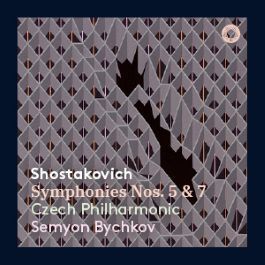
Czech Philharmonic, Shostakovich Symphonies 5 and 7
The Czech Philharmonic, under Chief Conductor and Music Director Semyon Bychkov, presents two of Dmitri Shostakovich’s most powerful symphonic statements: his Fifth and Seventh Symphonies. For Bychkov, no music is more essential or closer to the bone than Shostakovich's: "What amazes me is how strongly Shostakovich’s existential music resonates in a world which seems, outwardly, very different from the one in which he was fighting for his life, both as a human being and a composer."
Like Shostakovich, Bychkov grew up in Leningrad (now St Petersburg) and became obsessed by the composer’s music from an early age. Symphony No. 5 has been part of his repertoire since the early 1970s, when he began conducting it as a student at the Leningrad Conservatory. Symphony No. 7, Leningrad, holds particular personal significance for Bychkov: his mother lived through the city’s 900-day siege during the Second World War.
This release continues the acclaimed partnership between the Czech Philharmonic, Semyon Bychkov and PENTATONE. Their most recent major project, the complete Mahler symphonies cycle, began in April 2022 and culminated in April 2026. In celebration of the Year of Czech Music 2024, they released Smetana’s Má vlast, which won the BBC Music Magazine Orchestral Award 2025, and Dvořák’s Symphonies Nos. 7–9.
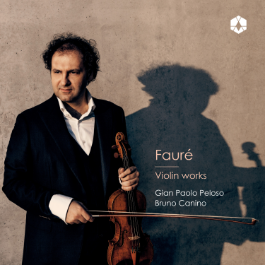
New Album: Fauré Violin Works - Gian Paolo Peloso and Bruno Canino
Gian Paolo Peloso and Bruno Canino present Fauré’s complete music for violin and piano, including the two sonatas alongside the Romance, Andante and Berceuse. The programme spans four decades, from the lyrical A major Sonata of 1876, the composer’s first masterpiece, to the very different E minor Sonata, written forty years later during the First World War. Long overshadowed by its predecessor, the Second Sonata draws its slow movement from a symphony Fauré had discarded. The three shorter works complete a programme that traces Fauré’s writing for violin and piano from his early maturity to his later years.
Regarded as one of Italy’s most accomplished violinists, Gian Paolo Peloso made his debut aged ten under Luciano Berio, studied with Ruggiero Ricci, Ivry Gitlis, Viktor Tretyakov and others, and has performed widely across Europe, Asia and the United States. He plays a 1710 Matteo Goffriller violin. Bruno Canino has enjoyed a long international career as soloist and chamber musician, collaborating with artists including Itzhak Perlman, Lynn Harrell and Viktoria Mullova, and conductors such as Claudio Abbado and Pierre Boulez. Having previously recorded Respighi and Busoni sonatas together for Sony Classical, Peloso and Canino continue their partnership in this wide-ranging Fauré programme.